Thursday, 21 January 2016

Polo's Challenge to Biologists in his Introduction to Philosophy

Recently, I published an review of Leonardo Polo's 'Introduction to Philosophy' in the Journal of Polian Studies. In it, I highlight the challenge Polo's thinking poses to biologists, even in this introductory work. Polo is a 'systemic thinker' who has thought through very fundamental concepts that will prove very useful now that the study of the Human Genome and other 'omes' is proving just how interrelated everything is in an organism.

You can access my full review here.

Monday, 4 January 2016

Interesting website on John Henry Newman

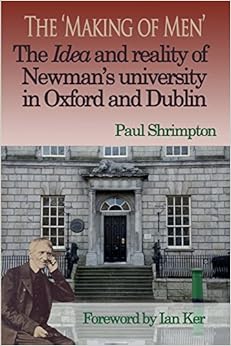
Paul Shrimpton has recently written a book about John Henry Newman, entitled,  "The making of men: the Idea and reality of Newman’s university in Oxford and Dublin" (Gracewing, 2014).

He has now published some of the material in this book on a website, which can be browsed for specific themes of interest. One topic mentioned there, of special interest to me is the one on the compatibility of faith and reason. But there are many others worth exploring.

The homepage of this website can be found here.

Friday, 14 August 2015

Booklet published about Faith and Science: Can I, a Scientific Student, Believe?

A few years ago I gave a lecture at Amsterdam University College about faith and science, at the request of a student. The response was good then, and I still like the project, so I decided to publish this lecture as a booklet, in electronic format. This booklet is available for free and written in English. You can find more information below.

Can I, a Scientific Student, Believe?

A science student’s intellectual battle to unite himself to his religious parents. 

When his Jewish family invites Nicodemus to move with them to Jerusalem, he asks a religious scientist how faith and science can combine; but when fast answers are in short supply, he must both learn that faith requires serious study and that there is more to faith than knowledge alone, or his family’s convictions will remain beyond his reach forever.

The booklet can be downloaded without charge from this page.

Saturday, 30 May 2015

4 Paradoxes About Our Personal Desires that will Make You Wonder

Have you ever wondered what it would be like to be completely free? What it would be like to get to know the things you love as deeply as possible? What it would be like to always be together with the person you love most? And have you ever wondered why it is, that we have a great desire to be in these situations, but that these desires seem never to be fully fulfilled?

In this talk, given in a TED-like style, I take you on an exploratory tour of four paradoxes we find within us, related to our deepest desires. I explain why the natural sciences will never be able to explain these paradoxes, and under what conditions they could be explained. Finally, I draw some fundamental conclusions about the science and faith discussion.

These thoughts were inspired on prof. SellĂ©s description in “AntropologĂ­a para Inconformes” of the personal transcendentals that Leonardo Polo discovered. Enjoy!


Wednesday, 18 March 2015

About happy families and happy children

The family is an important theme this year. In the Netherlands, the social systems supporting them have changed quite drastically recently. I have written an article on Mercatornet about that, that you can find here:

http://www.mercatornet.com/family_edge/view/welfare-reform-needs-strong-families

In the article, I also mention some positive initiatives, like the Parents2B app that my sister has launched. I think that her initiative is really important, and here's why.

Tuesday, 11 November 2014

Why I am happy to teach about ecology

Today, I will be teaching the first class in the Big Questions in Science course at Amsterdam University College. In this course, we deal with all the major areas of biology, and we try to focus on the ‘big questions’, which are often in those areas where science and society meet. The first class about ecology is a wonderful opportunity to talk about the importance of taking care of our environment.

In this class, I usually talk about the Lake Victoria disaster, which is a disaster story with a twist. We first focus on the disaster story as it is usually told, then go into the science, which shows the story is more complicated than it seems, and finally move to the management of the ecosystem, which shows that not only the biology is complicated, but the social side of it is as well. In the end, I hope to paint a more complete picture of all the things that go into taking good care of our environment.

Personally, I am very happy to be able to teach about this subject, because I think it is very important that we take good care of our environment, as well as of the people that interact with it. As a Catholic Christian, I think that God has created our planet for us to be our home, but has given us the task to take good care of it, and the task to take good care of each other. Both of these dimensions are intimately related to each other: we cannot take good care of people without taking good care of their environment, while we also cannot take good care of the environment and leave the people that live in it out of the equation, or even try to get rid of them. Only by paying full attention to both people and environment can we establish the wonderful harmony between the human being and creation that God has intended.

Interestingly, the Vatican has over the last years shown with deeds that the Church values the environment. They have for instance installed many solar panels, which have resulted in its being called “the greenest place on earth”. Pope Benedict has also been called “the Green Pope” for this reason, while Pope Francis is seemingly preparing a pastoral letter (encyclical) about the environment issue. So the environment and its inhabitants are important for the Church. All the more reason for me to be happy to be able to teach about it!

Conquering Mental Castles on Mercatornet

Recently I wrote an article on Mercatornet, about the philosopher Leonardo Polo. In it, I focused on his methodological proposition of "detecting the mental boundary so that we can go beyond it".

In my view, the issue Polo points to is a an important interpretative key for understanding what often goes wrong in the science - religion media debate. Both sides come to the table with their frame of mind, and opening up to the valid points the other makes is sometimes quite difficult. But just this is the challenge.

You can find the article here: http://www.mercatornet.com/articles/view/conquering_mental_castles